
PayCredit basics
PayCredit is the Paymentology credit ledger module which reduces the complexity of issuing and managing credit cards by combining credit card issuing and credit ledger management in a single service.
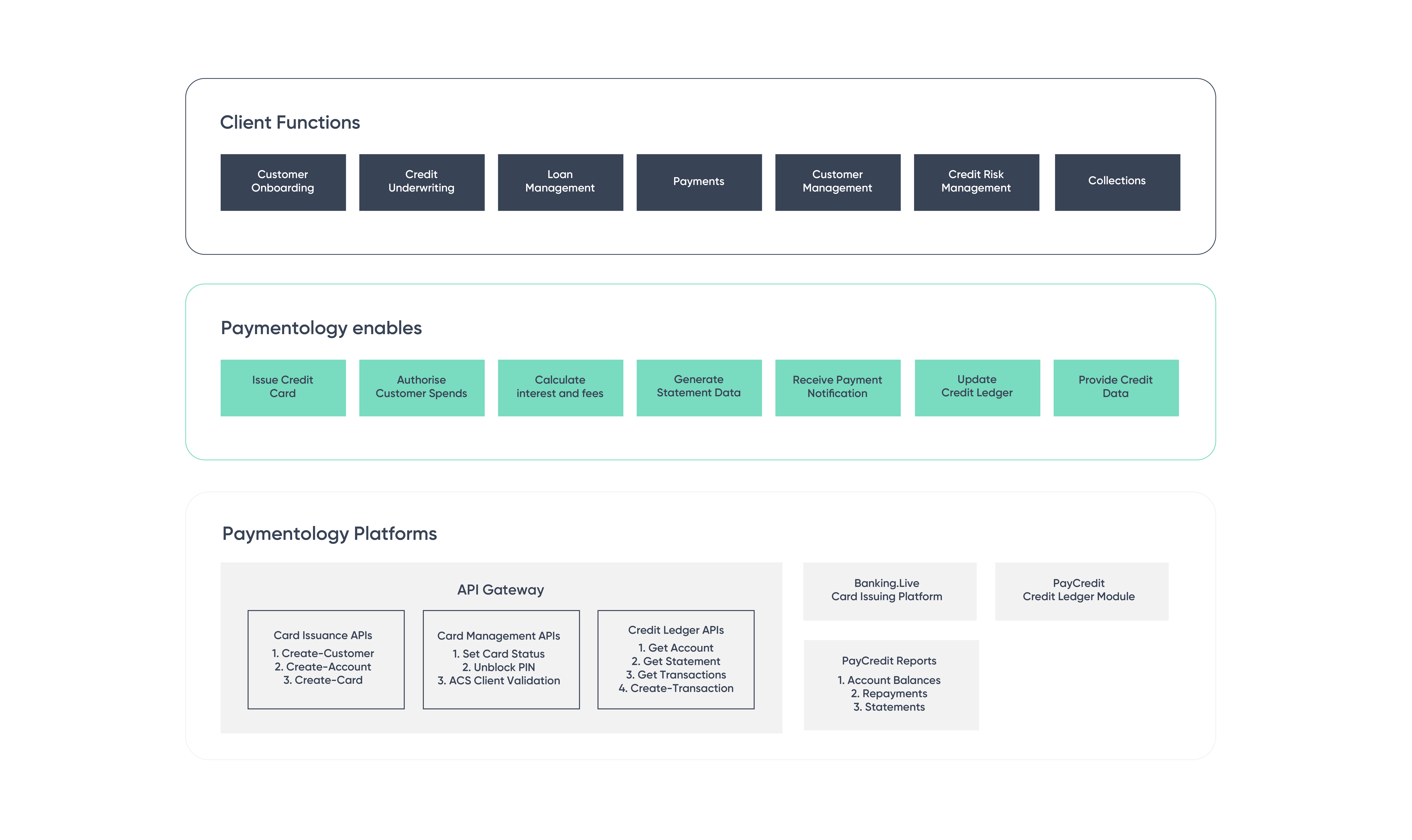
You have a broad range of functions that enable the issuance and support of credit card customers. Paymentology is a key enabler of these functions as illustrated in the diagram below.
PayCredit is the record of:
- Debt (referred to as principal): including purchases, cash withdrawals, fees etc.
- Repayment of debt: the record of how any repayment is allocated to each debt amount.
- Calculated interest: daily calculation of interest for each debt amount, before it is posted to the account
- Posted interest: interest that has been posted to the account, which becomes a debt to be repaid
- Repayment of interest: once interest has been posted, it can have repayments allocated to it
Core functions
The core functions we enable are:
- Issuing a credit card: once you have onboarded a new customer, performed KYC and credit checks and passed to underwriting for credit decision, PayCredit can issue a credit card.
- Authorizing customer spend: PayCredit authorizes customer credit card spend based on credit limit and available balance on the account.
- Generation of statement data: PayCredit provides statement data to you via API call or reports including full statement amount, the minimum amount and the repayment due date.
- Receiving payment notification: you are responsible for collecting the money from the customer and providing notification of repayment amounts by API.
- Updating the PayCredit credit ledger: PayCredit updates the ledger based on repayments and configured repayment priority, i.e. selection of interest, fees or instalments before remaining balance.
- Providing credit data: PayCredit provides a range of data including statements, transactions and allocation of repayments via API .
- Managing credit accounts: you can update accounts via API calls.
Updated 11 months ago
Did this page help you?