
Transactions
A transaction refers to any business activity that results in a direct effect on the financial status and financial statements of the business. In Paymentology, transactions are associated with FAST messages, which provide more context about the activity.
Transactions are categorised according to:
- the source or trigger
- the function of the transaction
Scheme transactions
This is the most common transaction type. In this scenario, this is the flow:
- Paymentology gets an ISO message from the scheme or switch
- The transaction is processed
- A FAST message is sent out
- A response is received indicating whether the request succeeded or not
Steps in a scheme transaction
Below is an example of a scheme transaction and its three main steps:
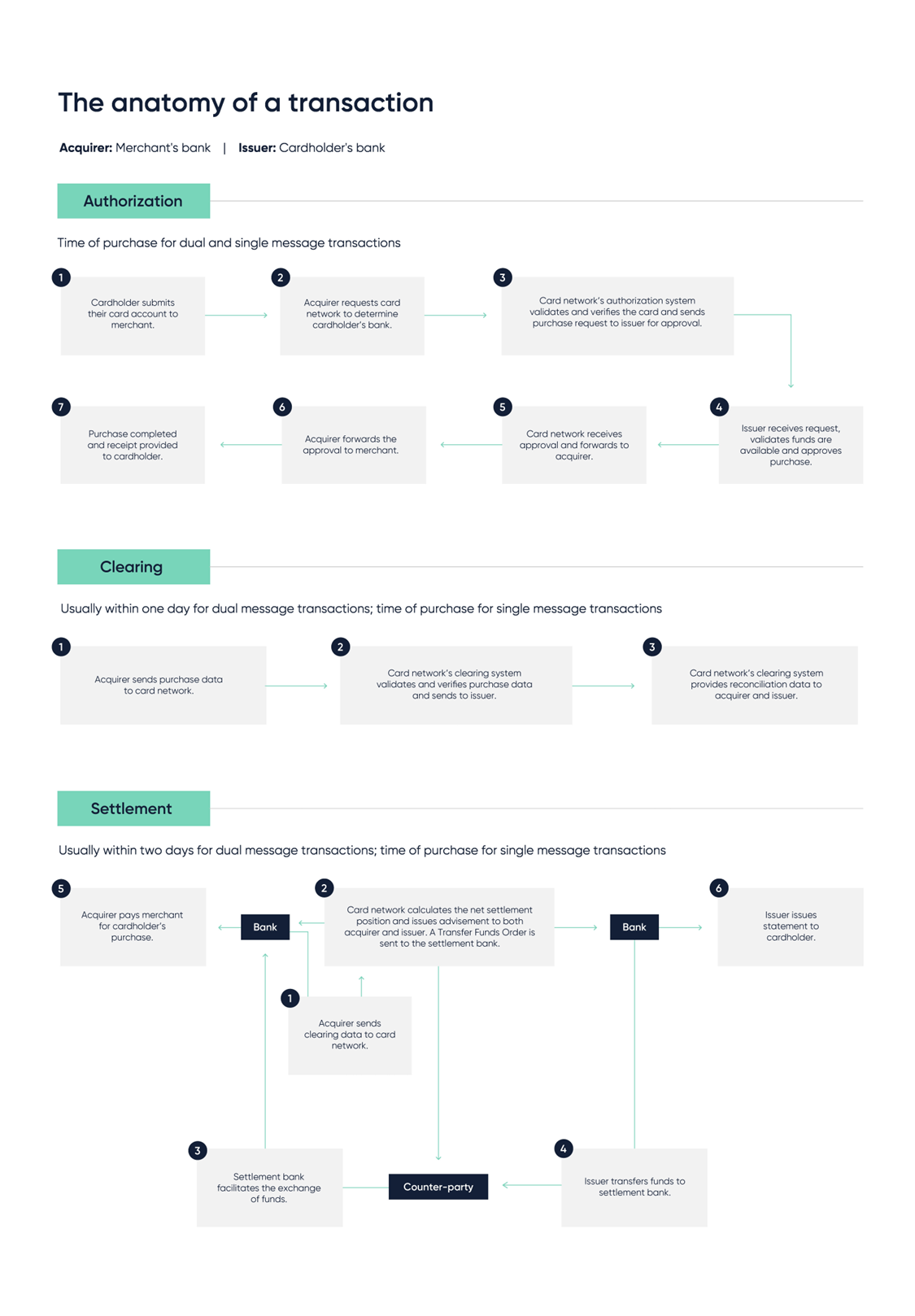
Anatomy of a transaction
The steps mentioned above (within a scheme transaction) can themselves be classified as separate types of transactions.
Non-scheme transactions
Non-scheme transactions have two sub-categories:
- Transactions triggered by Platform
- Transactions triggered by Client
Transactions triggered by Platform
These include:
- Interest charges (for example, interest on the cycle date in the case of credit)
- Platform fees
- Transaction fees
These impact the financial balance of the account but are not necessarily triggered by the scheme/switch.
Transactions triggered by Client
In this scenario, the client triggers a transaction via API*.
Example: The Load balance V2 API call is a transaction since it impacts the financial balance of the account but is not triggered by the scheme/switch.
Updated 11 months ago